
Advancing Linear and Non-Linear Pathways to Scale Girls in Energy for Inclusive Industrialisation, Social Development, and Social Justice
Held during the 64th Session of the Commission for Social Development (CSocD 64)
The virtual side event was convened during the 64th Session of the Commission for Social Development (CSocD 64), which met under the priority theme “Advancing Social Development and Social Justice through Coordinated, Equitable, and Inclusive Policies.” As the principal ECOSOC functional commission mandated to monitor the implementation of the Copenhagen Declaration and Programme of Action of the 1995 World Summit for Social Development, CSocD continues to play a critical role in advancing poverty eradication, full and productive employment, and social integration.
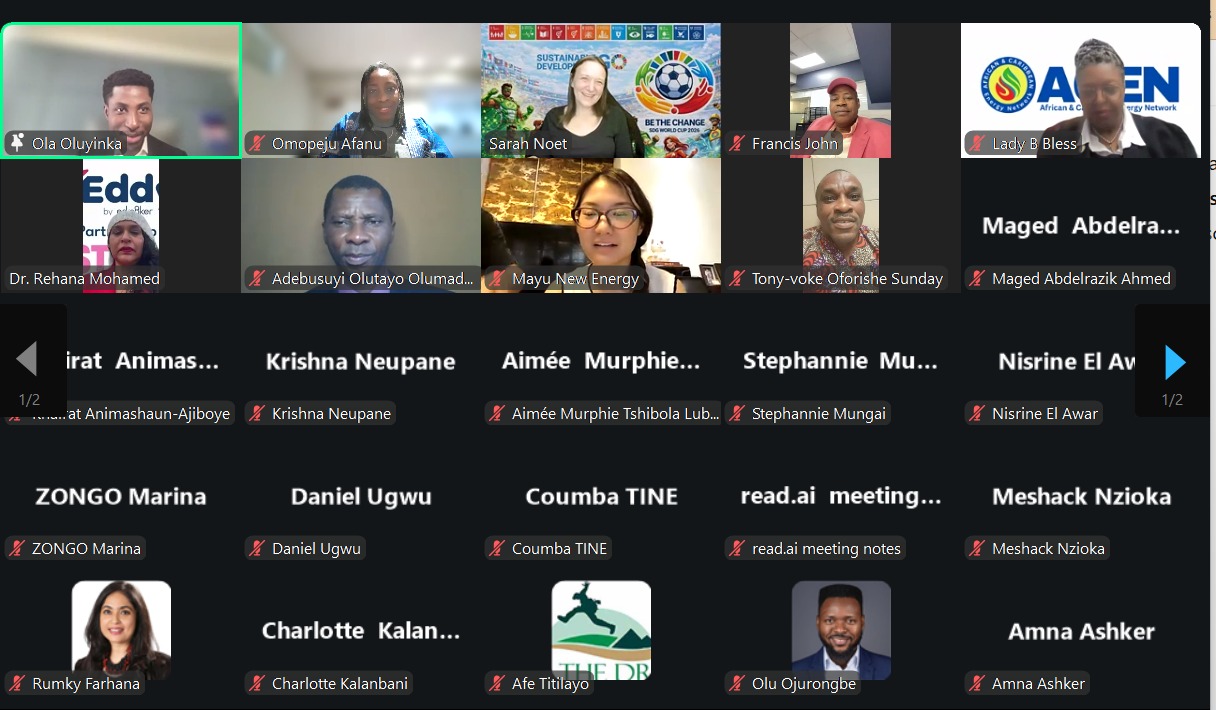
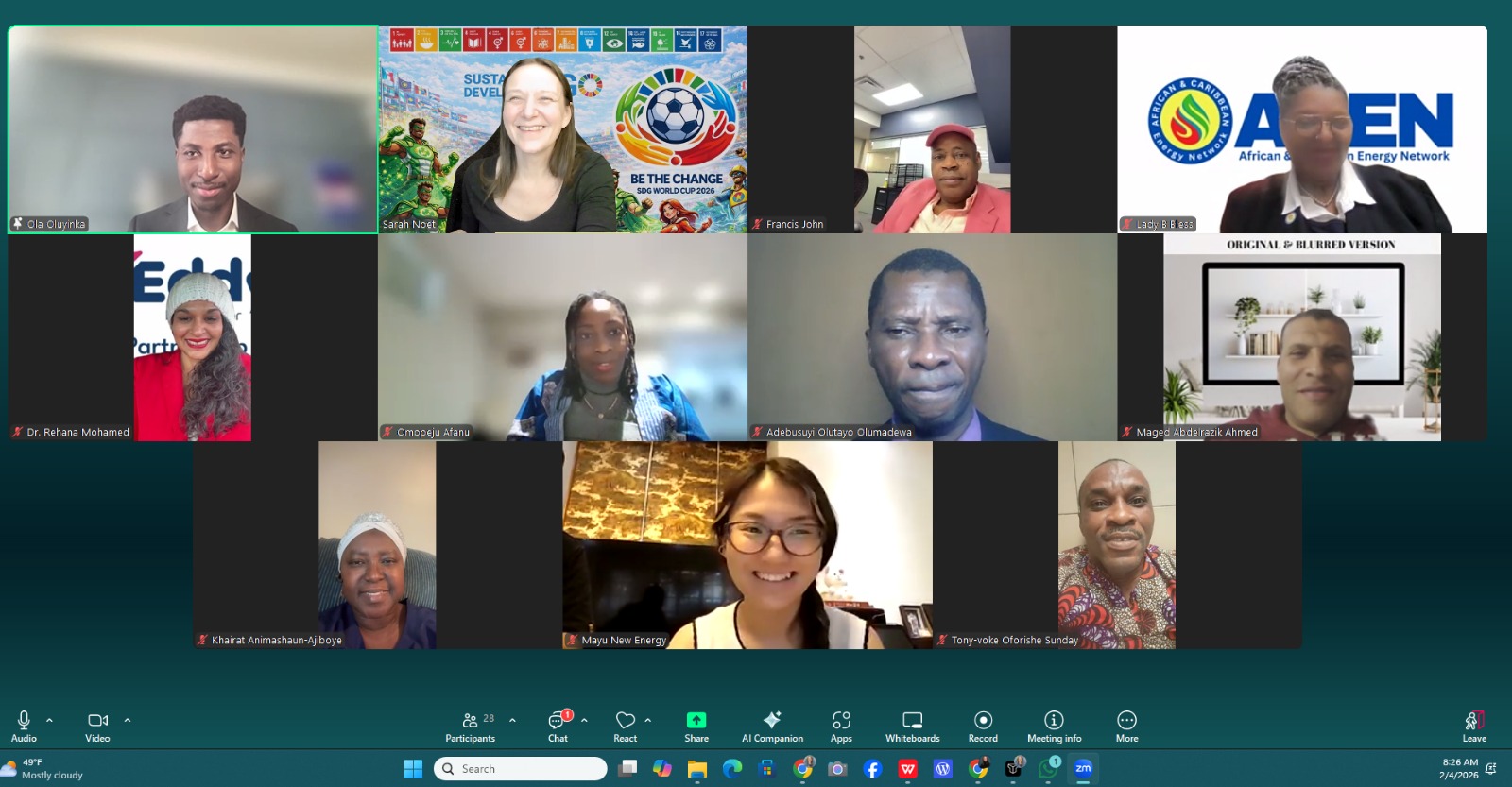
The session was moderated by Ola Oluyinka, Vice President, International Affairs and Co-Founder of the Girls in Energy Project, who framed the discussion around the persistent structural barriers facing girls and young women from marginalized and informal communities. Despite global progress, energy poverty continues to limit access to education, skills development, and participation in productive sectors—particularly renewable energy and green industries—thereby undermining inclusive industrialisation and deepening social and economic inequalities.
In response to these challenges, the Girls in Energy Project was presented as an integrated and coordinated model that combines linear pathways—such as formal education, skills certification, and employment—with non-linear pathways, including community leadership, innovation, asset ownership, and policy engagement. The model is further strengthened through the deployment of 10MW mini-grid solutions, designed to connect underserved communities and link energy access directly to education and livelihoods.
The keynote presentation was delivered by Adebusuyi Olutayo Olumadewa, Founder of DoTheDream Youth Development Initiative (YDI) and Lead of the Girls in Energy Project. In her presentation, “Connecting the Dots: Intersectionality as the Economy,” she emphasized that intersectionality should be understood not only as a social framework but as an economic reality. She highlighted the importance of integrating both linear and non-linear pathways to accelerate, actualize, and localize girls’ participation in the energy sector globally, while fostering unified collaboration across institutions, sectors, and policy spaces.
Building on this foundation, Oluseyi Oyebisi spoke on Empowering Women in Clean Energy, underscoring the importance of community-level action in inspiring girls to pursue careers in energy. He highlighted the critical role of civil society organizations in addressing gender-based barriers, supporting the care economy, and creating enabling environments for girls and women to thrive in clean energy ecosystems.
Lady Bless, representing the African and Caribbean Energy Network, addressed Energy Justice and Universal Access. She emphasized that access to electricity is a universal human right rather than a privilege, and stressed the need to end energy poverty through inclusive industrialisation. Her intervention highlighted the importance of empowering women, girls, and youth through clean energy, advocating for collaboration, partnerships, digital empowerment, and the integration of both linear and non-linear career pathways across Africa, the Caribbean, and the wider Global South. She further emphasized the necessity of enabling policies, financing, and cross-regional cooperation to achieve equitable energy access.
Sarah Noet, Founder of Be the Change, Global Goals, who discussed Scaling Energy Projects for the Global South through innovation and sustainability. Sarah presented her organization’s work at the intersection of science, sports, and fashion, leveraging digital twin technology and global city partnerships. She highlighted upcoming initiatives, including a summit in Senegal, events in Seattle, and projects in Nigeria, alongside innovations such as a patented concrete power trowel drill bit, a zeolite-based cement replacement, and digital twin-enabled products for carbon footprint tracking and social responsibility in the athletic industry.
The session concluded with a powerful presentation by Dr. Paige Afanu on Energy Justice for Girls’ Empowerment. She highlighted the disproportionate impact of energy poverty on girls’ education and livelihoods in the Global South and emphasized the need for inclusive industrialisation supported by catalytic, gender-responsive financing. She called for sustained investment to empower girls and women as leaders and change agents within energy systems.
Overall, the meeting reinforced the central message that energy access is foundational to education, health, economic development, and social justice. Speakers emphasized that scaling girls in energy requires the deliberate integration of both linear and non-linear pathways, supported by inclusive policies, innovative financing, and strong partnerships. The discussion highlighted the vital role of international networks, civil society, and community-driven approaches in translating global commitments into local impact.
The side event concluded with a clear call to action for governments, UN agencies, development partners, the private sector, and civil society to collaborate in supporting the Girls in Energy Project, prioritize energy access for all, and invest in electrifying learning systems that enable girls and women to lead, innovate, and shape inclusive energy futures.
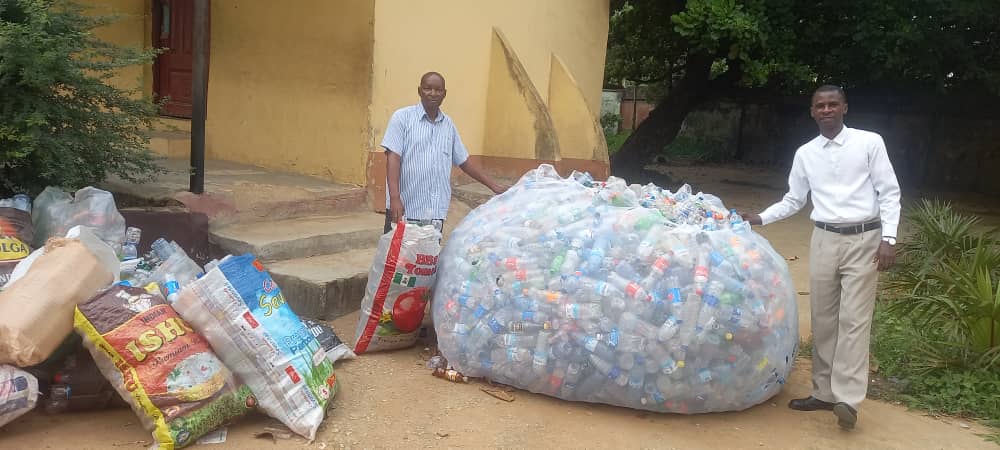
DoTheDream Youth Development Initiative is a non profit organisation that uses formal and informal education as a creative tool through communications, media, and technology in empowering youths towards promoting change in the society.
An organisation in Special Consultative Status with the United Nations Economic and Social Council (ECOSOC) in New York, Geneva and Vienna,with the vision of Building youths for Sustainable Development.
Our role in SDGs 7 is to connect the youths to the opportunities that encourages innovations in value chains and cause growth for sustainable development
#GirlsinEnergy aimed at inspiring, educating, and empowering young girls to pursue careers in the energy sector through dynamic combination of conferences, competitions, career mentorship, and camps, #GirlsinEnergy seeks to bridge the gender gap in STEM fields, particularly in energy-related industries was declare open by the Initiator Adebusuyi Olutayo Olumadewa
The event featured a dynamic career session with distinguished international speakers, including Rehana Mohamed EdD Lady B Bless , and Dr. Oladunni Owo , who shared their personal experiences and motivated the young participants to follow their aspirations in energy.
Mrs. Arogbodo, Principal of Ayedeere Ajibola Senior High School, warmly welcomed attendees and underscored the project’s potential to empower young women and pave the way for their success in the energy industry. Miss Otayomi Esther, Tutor in Charge, encouraged students to maximize the benefits of the initial 300 hours of the program.
Rehana Mohamed EdD delivered an inspiring keynote address highlighting the critical role of the energy sector and the transformative impact of the Girls in Energy project. She emphasized the program’s mentorship opportunities, career workshops, and site visits to leading energy companies, all aimed at equipping participants with the skills and knowledge necessary for thriving careers in energy.
Lady B Bless, co-founder and co-chair of the African & Caribbean Energy Network (ACEN) , spoke passionately about the importance of educating girls in energy as a pathway to women’s empowerment and sustainable development. Sharing her personal journey in the energy industry and her advocacy for gender equality in leadership, Lady B Bless expressed enthusiasm for the upcoming cohort and pledged her ongoing support to the participants.
Dr. Oladunni Owo further motivated the students by emphasizing the importance of career guidance and personal ambition in shaping their professional journeys.As the founder, Women in Energy, Oil & Gas (WEOG) delivered a compelling message on the urgency of closing the gender gap in the energy sector. She noted that 70% of energy solutions directly address national challenges and encouraged young girls to envision the world without energy to appreciate its critical importance. She shared inspiring examples of youth-led innovations in energy. She concluded with a call to action to “bring energy into the classroom” and introduced the empowering slogan:
“Energy Girls Closing Energy Gaps, Energy Girls Moving Nigeria Forward.”
Canadian Renewable Energy Association (CanREA) U.S. African Development Foundation (USADF) The Global Energy Alliance for People and Planet (GEAPP) International Energy Agency (IEA) International Renewable Energy Agency (IRENA) African Bank Sustainable Energy for All (SEforALL) Damilola Ogunbiyi Foluke Michael Damilola Olaniyi Anita Otubu Tunbosun Afolayan, SCMP®,CNN SDG7 Youth Constituency Simon Gosling